June 20, 2026 • Maria Andersen • 9 min reading time • Specs verified June 25, 2026
Turbocharger Upgrades for 600-1000 HP Builds: Matching Compressor Maps to Your Engine's Real Airflow Demands
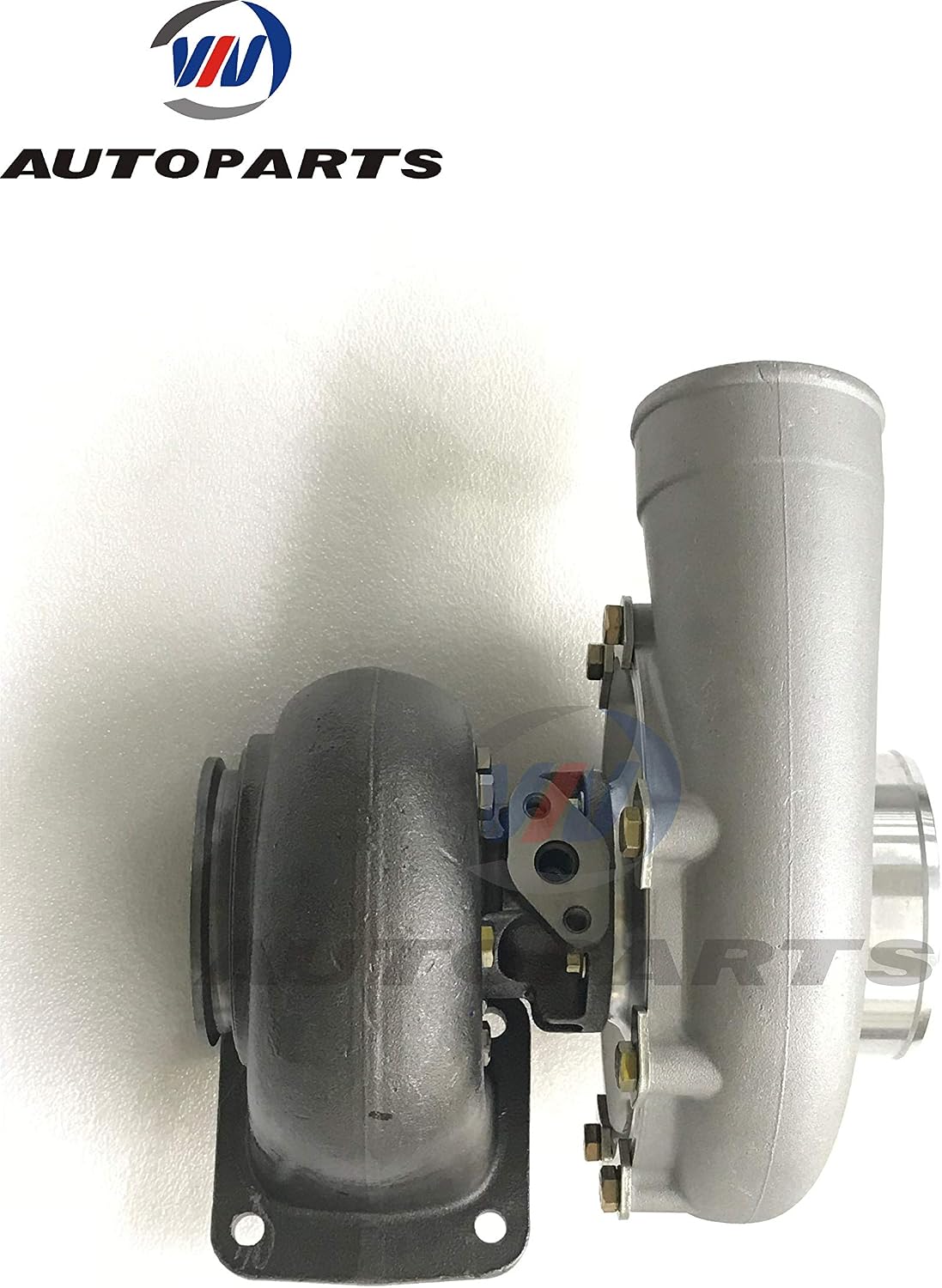
If you’ve ever searched “best turbo for 600 hp” and walked away more confused than when you started, you’re in good company. A turbocharger is, at its simplest, an air pump — it forces more air into your engine than the atmosphere alone would deliver, which lets you burn more fuel and make more power. The trick is that not every air pump suits every engine. Pick one that’s too small and you’ll hit a wall well before your horsepower target; pick one that’s too large and it won’t build boost pressure until the engine is already far into the RPM range, making the car feel sluggish when you need it most. This guide is about the diagnostic tool that bridges those two failure modes: the compressor map, a chart that shows exactly how much airflow a given turbocharger can deliver, at what pressure, and how efficiently. By the time you finish reading, you’ll know how to place your engine’s actual airflow demand onto that chart — and confirm or rule out any turbocharger before you spend four figures on it.
| EDITOR'S PICK[A-Premium HE351VE Complete Turb](https://www.amazon.com/dp/B0B9N2GQ2F?tag=greenflower20-20)… | Mid-tier[Billet T78 7875 T4 A/R.96 A/R.7](https://www.amazon.com/dp/B07K3SFPKK?tag=greenflower20-20)… | Budget pick[maXpeedingrods Turbo Turbocharg](https://www.amazon.com/dp/B0FSCV75CC?tag=greenflower20-20)… | |
|---|---|---|---|
| Horsepower rating | — | 800-1000 HP | — |
| Compressor housing | — | T4 | — |
| Turbine housing A/R | — | 0.96 | — |
| Compressor A/R | — | 0.75 | — |
| Wastegate type | — | V-band | — |
| Gasket included | ✓ | — | — |
| Price | $718.99 | $399.00 | $195.99 |
| See on Amazon → | See on Amazon → | See on Amazon → |
What a Compressor Map Is Actually Telling You
A compressor map looks intimidating the first time you see one, but it’s doing exactly one job: describing the turbocharger’s useful operating range. The horizontal axis is mass flow rate — how many pounds of air per minute the compressor wheel can move. The vertical axis is pressure ratio — the ratio of boost pressure (plus atmospheric) to atmospheric pressure alone. A pressure ratio of 2.0, for example, means you’re delivering air at roughly twice atmospheric pressure, or about 14.7 psi of boost at sea level.
Inside those axes are two critical boundaries:
- The surge line (left boundary): Cross it and the compressor stalls — airflow reverses direction momentarily, causing a distinctive chuffing or fluttering sound and, in sustained conditions, compressor wheel damage. Owners of improperly sized turbos frequently report this surge at low throttle openings under boost.
- The choke line (right boundary): The compressor physically cannot move more air than this. Trying to operate here collapses efficiency and generates excessive heat.
Between those two lines are efficiency islands — concentric oval contour lines showing where the compressor converts shaft energy into pressurized airflow most effectively. The sweet spot, typically 70–76% efficiency for a high-performance billet wheel, is the bullseye. Per Garrett Motion’s turbocharger technical resources, operating in the 70%+ efficiency band directly reduces charge air temperature — the temperature of the compressed air entering your engine — which is a first-order variable in power output and knock resistance.
The practical goal: plot your engine’s airflow demand (at your target boost and RPM) onto the map and confirm it lands inside the high-efficiency islands, with adequate margin away from both boundary lines.
Calculating Your Engine’s Real Airflow Demand
Before you can plot anything on a compressor map, you need a number: pounds of air per minute (lb/min) your engine needs to hit its horsepower target. The math is more approachable than it looks.
The Core Formula
Airflow (lb/min) = (Target HP × BSFC) ÷ (Air-Fuel Ratio × Efficiency)
Where:
- BSFC (Brake Specific Fuel Consumption) ≈ 0.55–0.65 for a forced-induction gasoline engine under boost
- Air-Fuel Ratio ≈ 12.5:1 (a safe rich power target on pump E10) or 11.5–12.0:1 on E85
- Efficiency (volumetric efficiency of the engine) ≈ 90–95% for a healthy boosted four-valve engine
In practice, Engine Labs’ coverage of turbocharger sizing simplifies this to a commonly used rule of thumb: approximately 1 lb/min of airflow per 10 wheel-horsepower on a gasoline engine at moderate pressure ratios. That’s a rough starting point, not a final answer — use it to sanity-check, not to replace the full calculation.
By the Numbers: Airflow Targets at Common HP Goals
| Wheel HP Target | Estimated Airflow (lb/min) | Typical Pressure Ratio (pump gas) |
|---|---|---|
| 600 whp | 58–65 lb/min | 2.4–2.7 |
| 750 whp | 72–82 lb/min | 2.7–3.1 |
| 900 whp | 87–98 lb/min | 3.0–3.4 |
| 1,000 whp | 96–110 lb/min | 3.2–3.6 |
Figures reflect naturally aspirated displacement of 2.0–3.5L; larger engines or E85 fuel will shift these ranges. Cross-reference against manufacturer compressor maps before purchasing.
These numbers match the operating ranges documented in Precision Turbo & Engine’s turbo selection technical guide and are consistent with data cited in SAE paper 2019-01-0325 on turbocharger matching for high-performance applications.
Mapping Specific Turbochargers to the 600–1000 HP Range
With your airflow target and pressure ratio in hand, you can evaluate specific hardware. Here’s how widely discussed options at each tier stack up based on published specs and aggregated owner build data.
600–750 WHP: The Precision 6266 and Garrett G35-1050 Zone
At the lower end of the high-horsepower range, two turbos appear in nearly every serious builder conversation:
Precision Turbo 6266 Gen 2 (Billet) — Precision’s spec sheets rate this unit for up to approximately 750 wheel-horsepower on gasoline. Its compressor map shows a usable airflow range of roughly 20–72 lb/min with an efficiency island that extends well into the 73–76% range at the pressure ratios needed for 600–700 whp on a 2.0–2.5L engine. Owners in long-run build threads consistently report strong spool characteristics in the 3,800–4,500 RPM range on 2.0L four-cylinders. The tradeoff: at 650+ whp on a larger displacement engine, you’re working the outer edge of its efficiency map, and charge temps reflect it.
Garrett G35-1050 — Garrett’s published compressor map puts this unit’s efficiency sweet spot between 35 and 78 lb/min at pressure ratios of 1.8 to 3.2, covering 600–800 whp territory with real margin. Garrett’s technical resources highlight its billet aerodynamic wheel as reducing surge onset, which owners of street-driven builds cite as a day-to-day drivability advantage. It’s priced in the $1,100–$1,400 range as of mid-2026, making it one of the most cost-effective entries at this power level.
The tradeoff to name explicitly: The G35-1050 has a slightly wider compressor map than the 6266 at comparable frame size, which means it’s more forgiving on engine displacement variation. The 6266 responds marginally faster on small-displacement engines. If your build is a 2.0L daily driver targeting 650 whp, the 6266’s response characteristic is valued. If you’re on a 3.0L stroker targeting 750 whp with room to grow, the G35-1050’s map margin is the better hedge.
750–900 WHP: Precision 7675 and Garrett G45-1050 Territory
Step up into this range and frame size, compressor wheel diameter, and turbine A/R (the ratio that determines how quickly exhaust energy reaches the turbine wheel) all become decision variables, not afterthoughts.
Precision Turbo 7675 — Published specs rate this unit to approximately 950 whp. Its compressor map, available in Precision’s technical documentation, shows peak efficiency (72–75%) in the 65–95 lb/min band at pressure ratios of 2.6–3.4 — squarely covering the 800–900 whp zone without driving the operating point toward the choke line. Hot Rod Magazine’s coverage of high-power turbo builds has cited the 7675 as a benchmark in this class for street-strip builds where response matters. Pricing typically runs $1,800–$2,400 depending on housing configuration.
Garrett G45-1050 — Garrett’s map data shows this unit comfortably handling 85–105 lb/min at pressure ratios up to 3.6, making it the more capable unit at the ceiling of this tier. On E85, where builders can run higher boost with greater density ratios, the G45 has documented map coverage to approach 1,000 whp without efficiency collapse. The tradeoff: it’s physically larger, and builders on tight engine bay packages (EJ Subaru, K-series Honda) frequently encounter fitment constraints that favor the Precision 7675’s more compact footprint.
900–1000+ WHP: Compound Configurations and Standalone Management
At the top of this range, a single turbocharger begins to work against you. To reach 1,000 whp on a street-legal platform without exotic fuels, pressure ratios often push into territory (3.5:1 and above) where intercooler outlet temperatures become the limiting factor regardless of turbo efficiency. This is where compound turbo setups — a small “primary” turbocharger feeding compressed air into a larger “secondary” — distribute the pressure work across two compressor maps, each operating in its high-efficiency zone.
Turbonetics’ compound turbo documentation and SAE research on two-stage compression systems both confirm the core benefit: lower per-stage pressure ratios mean each compressor operates at higher efficiency, reducing overall charge temperature at the same final boost level. This isn’t marginal — builders targeting 1,000 whp on E85 with a compound setup report intercooler outlet temps 40–60°F lower than single-turbo equivalents at the same boost level, per aggregated owner build documentation on platforms like the EJ25 and LS3.
At this tier, standalone engine management is no longer optional. Haltech Elite 2500 and MoTeC M150 are the industry standards, both offering the fuel and ignition resolution needed to exploit compound boost curves safely. Haltech’s technical resources detail how their platform’s boost control algorithm handles dual-wastegate setups — a configuration that’s essentially unmanageable on a piggyback tune.
The Decision Framework: If X, Then Y
After tracking through compressor maps, pressure ratios, and build goals, most decisions reduce to a clear matrix:
If you’re targeting 600–700 whp on a small-displacement (2.0–2.5L) engine with a priority on street response → the Garrett G35-1050 or Precision 6266 Gen 2 covers the map efficiently, with the G35 offering slightly more room to grow.
If you’re targeting 750–900 whp on a larger platform (3.0L+) with occasional track duty → the Precision 7675 or Garrett G45-1050 is the correct frame size; choose based on bay fitment and fuel type (G45 has the edge on E85 pressure ratios).
If you’re targeting 900–1,000+ whp and expect the build to live there long-term → plan the compound configuration from the start. Retrofitting a primary turbo later means replacing or relocating intercooler piping, wastegate positioning, and potentially the entire exhaust manifold. The planning cost is orders of magnitude cheaper than the rebuild cost.
If your pressure ratio math puts your operating point within 5% of the choke line at your target RPM → size up one frame. The efficiency penalty of undersizing compounds at every subsequent modification.
The compressor map isn’t just a spec-sheet detail — it’s the single most honest document a turbocharger manufacturer publishes. Every claim about power potential has to survive being plotted on it. Build your selection process around the map first, and the horsepower follows.