May 11, 2026 • Maria Andersen • 9 min reading time • Specs verified June 25, 2026
Intercooler Charge Pipe Kits: Why Coupler Quality and Clamp Type Matter More Than Pipe Color at Boost Pressure
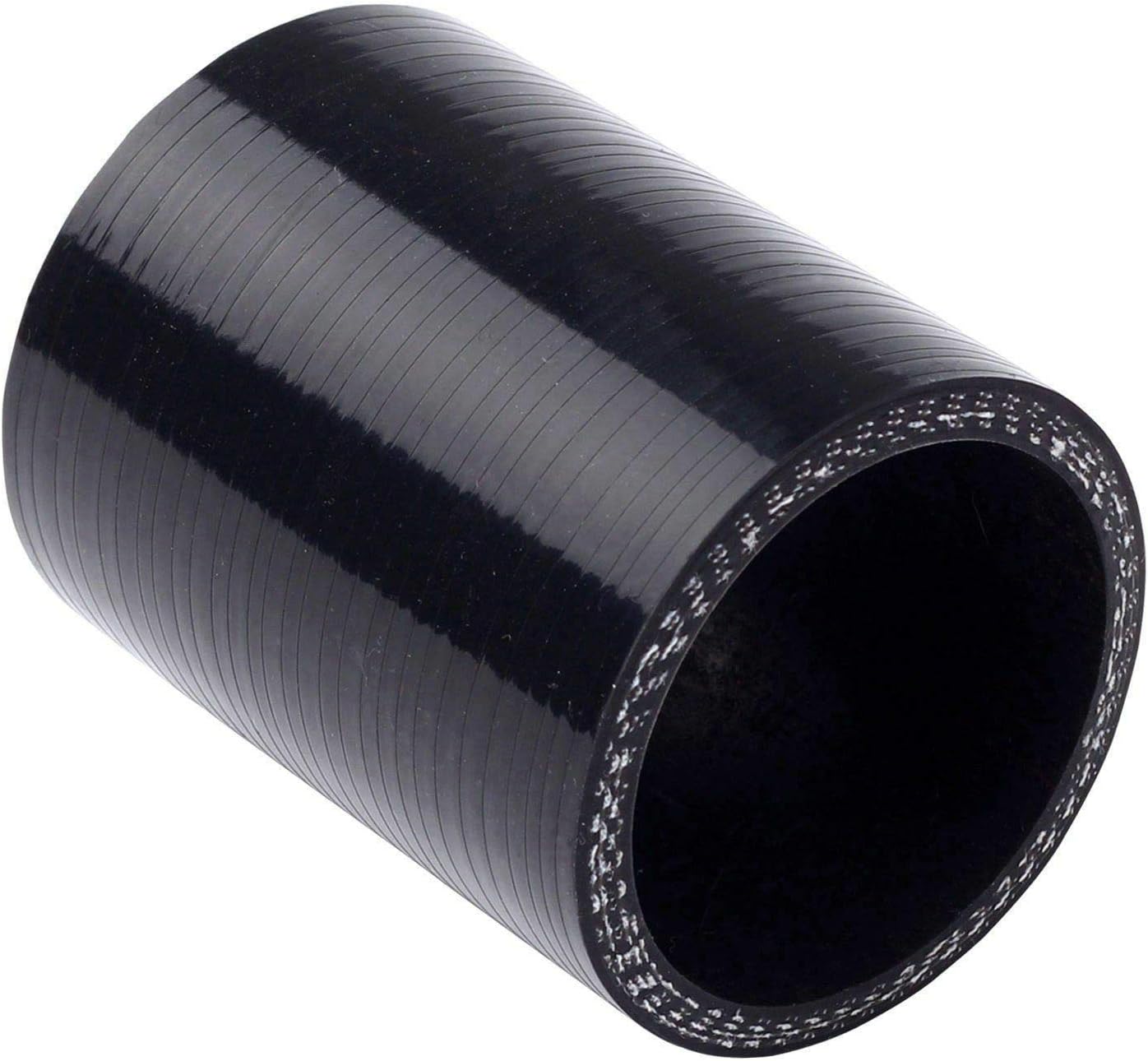
If you’ve ever shopped a turbocharger upgrade or an intercooler kit — an intercooler is a heat exchanger that cools compressed air before it enters the engine, which lets you pack more oxygen in and make more power — you’ve probably noticed that the pipes connecting everything together come in a dizzying range of prices, colors, and materials. The pipes carry pressurized air (called “charge air” or “boost”) from the turbo compressor outlet, through the intercooler, and down to the engine’s intake manifold. Every joint in that path is sealed by a flexible coupler (usually silicone or rubber) and held in place by a clamp. Sounds simple. But at 20, 30, or 40 PSI of boost pressure, every weak link in that chain is a potential blow-off event — and a coupler that pops at wide-open throttle doesn’t care how good your paint job looks. This guide breaks down what actually determines whether a charge pipe kit performs and holds together, so you can stop paying for anodized finishes and start paying for the things that matter.
| EDITOR'S PICK[maXpeedingrods Intercooler Pipi…](https://www.amazon.com/dp/B0G3ND1C8D?tag=greenflower20-20) | Mid-tierUniversal 3" Inch Aluminum Inte… | Budget pick3" 60cm Universal Aluminum Inte… | |
|---|---|---|---|
| Pipe Diameter | — | 3" | 3" |
| Vehicle Fitment | Honda/Acura specific | Universal | Universal |
| Clamps Included | — | ✓ | ✓ |
| Hoses Included | — | — | ✓ |
| Color | Silver | Black | Polished |
| Price | $160.00 | $123.89 | $116.99 |
| See on Amazon → | See on Amazon → | See on Amazon → |
Why the Pipe Itself Is Almost Never the Weak Point
Here’s a counterintuitive truth that experienced builders know but rarely say out loud: the aluminum or stainless pipe itself is almost never what fails. Aluminum tubing — even budget 6061-T6 from a mid-tier kit — is more than strong enough to handle typical street and mild track boost levels. What fails is the connection between pipes. Every coupler and every clamp is a potential failure point, and unlike a cracked pipe (which is obvious and visible), a coupler that’s slowly seeping under heat cycling will cost you boost, fuel economy, and diagnostic headaches long before it fully blows off.
Garrett Motion’s intercooler and piping technical reference (available via garrett.com/technical-resources) notes that pressure drop through the charge air system is cumulative — every elbow, every step-up or step-down in diameter, and every poorly sealed joint reduces the effective boost reaching the engine. Engine Labs’ piece on boost plumbing pressure drop makes the same point: a 1–2 PSI loss across sloppy piping connections sounds minor, but at a tuned target of 20 PSI it represents 5–10% of your available charge pressure gone before combustion even starts.
The pipe diameter matters too, but in a different way than most people assume. Undersized piping increases flow velocity, which creates pressure drop. Oversized piping slows velocity, which can hurt throttle response. Garrett’s technical documentation recommends targeting charge air piping that flows the volume your compressor produces with minimal restriction — for most street builds under 600 WHP, 2.5” to 3” piping is the right ballpark; compound or high-horsepower builds trending toward 800+ WHP benefit from 3” to 3.5” systems. Hot Rod Network’s overview of intercooler pipe sizing explains the relationship between pipe diameter, velocity, and system pressure drop in practical terms that match what top-tier kit manufacturers publish.
Coupler Material: What the Spec Sheet Tells You and What It Doesn’t
Silicone couplers are the industry standard for charge pipe applications, and for good reason: they flex enough to absorb vibration and minor misalignment, they handle continuous heat cycling from 250°F to over 400°F, and they don’t harden and crack the way OEM rubber tends to after a few years under the hood.
But not all silicone is the same, and this is where budget kits cut corners that are almost invisible at purchase.
Ply count is the single most important spec most buyers ignore. A coupler with three or four layers of polyester reinforcement fabric embedded in the silicone wall is a fundamentally different product from a single-ply piece, even if they look identical on the shelf. Gates Corporation’s silicone hose application guide documents how ply count directly determines burst pressure rating and fatigue life under repeated pressure cycling. Single-ply couplers rated to 30 PSI burst are fine for a mildly boosted daily driver at 10–12 PSI — you’ve got a 2.5x safety margin. Push that same coupler to 25 PSI on a tuned build and your margin compresses to 1.2x, which is where thermal fatigue and coupler stretch become real failure modes.
Wall thickness matters for retention, not burst pressure. A thicker wall resists “coning” — the tendency for a coupler under boost to try to push itself off the pipe end rather than seal tightly against it. Premium kits from manufacturers like Mishimoto and HPS specify 5mm to 6mm wall thickness as standard; budget kits often run 3–4mm. Owners across long-run reviews on platform-specific forums consistently report that couplers below 4mm wall thickness show measurable deformation after extended heat soak at the clamp bead.
Straight vs. reducer couplers deserve a mention here. When your kit uses a step-up or step-down in pipe diameter (common where the intercooler outlet is a different size than the throttle body inlet), a reducer coupler carries the same ply-count and wall-thickness requirements — but is more likely to be under-specced in budget kits because it’s a less common part with lower production volumes.
Clamp Type: The Decision That Actually Determines Whether Your Boost Holds
If couplers are the variable most buyers underestimate, clamps are the one they almost entirely ignore. This is backwards. A correctly specced coupler paired with the wrong clamp will fail just as reliably as a cheap coupler under a good clamp.
There are three clamp types you’ll encounter in the intercooler piping market, and they are not interchangeable:
Worm-gear clamps (standard hose clamps) are cheap, universal, and a poor choice for high-boost applications. They tighten asymmetrically — the screw mechanism creates a pressure point, and the band doesn’t distribute clamping force evenly around the coupler circumference. SAE International’s J1508 hose clamp test standard documents how worm-gear clamps generate uneven sealing pressure that can cause coupler creep (rotation under vibration) and micro-leaks at the clamp’s trailing edge. Fine for coolant hoses. Not fine for 20+ PSI charge air.
T-bolt clamps are the correct answer for most boosted street and track applications. A T-bolt clamp uses a smooth, continuous stainless band with a single tension bolt that spreads clamping force uniformly around the entire coupler circumference. Engine Labs’ coverage of boost plumbing hardware consistently points to T-bolt clamps as the minimum standard for any application above 15 PSI. They’re typically sold in kits as either standard T-bolt (budget) or 304 stainless T-bolt (preferred). The difference matters in underhood environments — standard carbon steel T-bolts rust, and rust expansion under the band reduces clamping force over time.
Constant-tension clamps (sometimes called Oetiker or ear clamps) are used by OEM manufacturers precisely because they maintain clamping force through thermal expansion and contraction cycles. They’re a legitimate option but require a specialized tool to install properly and aren’t re-usable, which makes them inconvenient for a hobbyist build that may need to come apart for future upgrades.
By the Numbers: Clamp Comparison
| Clamp Type | Even Force Distribution | Re-Usable | Corrosion Resistant (304 SS) | Typical Cost Per Clamp |
|---|---|---|---|---|
| Worm-Gear | No | Yes | Optional | $1–3 |
| T-Bolt (SS) | Yes | Yes | Yes | $5–12 |
| Constant-Tension | Yes | No | Yes | $3–8 (+ tool) |
What Kit Tiers Actually Deliver at Each Price Point
Budget charge pipe kits in the $150–$350 range (common for popular platforms like the WRX, EVO, or Mustang EcoBoost) typically deliver: adequate 6061-T6 aluminum pipe, single-ply couplers, and worm-gear clamps. The pipes are fine. The clamps are not. A budget kit is a reasonable starting point if you replace the clamps with 304 stainless T-bolts immediately — that upgrade costs $40–60 in parts and closes most of the functional gap.
Mid-tier kits at $400–$700 from manufacturers like HPS, Injen, and Mishimoto typically move to three-ply silicone couplers, T-bolt clamps included, and better coupler bead retention (the raised lip on the pipe end that the coupler locks against). Owners across aggregated reviews consistently identify this tier as where real-world durability improves meaningfully — the step from single-ply to three-ply is where heat-cycle fatigue becomes a non-issue for most street builds.
Premium kits at $800–$1,500+ from companies like Turbosmart, Perrin, or Torque Solution target high-boost or forced-induction builds where every pressure drop matters. These kits typically feature mandrel-bent (smooth-inside-bend) pipe rather than crush-bent, which preserves internal diameter through corners instead of creating a partial obstruction. At 400+ WHP, mandrel bending is worth paying for; below that, most dyno-verified builds show minimal measurable difference.
The Pipe Color Question — and Why It’s Almost Always a Distraction
Anodized finishes, powder coat, and polished aluminum look great on engine bay photos. They provide essentially zero functional benefit at any boost level. The exception is ceramic or thermal coating on pipes that route close to heat sources — an exhaust manifold or turbo housing — where keeping charge air temperatures down matters. But that’s a thermal barrier coating, not an aesthetic finish, and it’s a different conversation entirely.
If you’re choosing between two kits at similar price points and one is anodized blue while the other includes upgraded T-bolt clamps and three-ply couplers, the anodized kit is selling you a photograph. The other kit is selling you performance.
The Decision Rule: If X, Then Y
Here’s the framework that makes this straightforward:
If you’re running under 15 PSI on a street build: A budget kit with the worm-gear clamps replaced by 304 stainless T-bolts is a defensible choice. Swap the clamps at installation and you’ve addressed the real failure risk.
If you’re running 15–25 PSI on a street/track build: Spec a mid-tier kit that includes three-ply couplers and T-bolt clamps as standard. Don’t compromise on coupler wall thickness — verify you’re getting 5mm or better. The Mishimoto and HPS ranges are well-documented in this tier.
If you’re running above 25 PSI, building for competition, or running compound turbos: Mandrel-bent piping, four-ply couplers rated to 60+ PSI burst, 304 stainless T-bolt clamps, and verified bead retention geometry are prerequisites, not upgrades. At this level the pressure drop math from Garrett’s technical documentation becomes your design spec, not a suggestion.
In all cases: Verify your coupler ply count and burst rating before purchasing. If a kit’s product listing doesn’t publish those numbers, assume they’re single-ply and price accordingly. Sellers who are proud of their coupler spec publish it prominently.
The pipe color is the last thing on the list. If you’re reading a kit description and the lead feature is “available in 11 colors,” someone else’s marketing budget just told you where the engineering budget wasn’t spent.