June 7, 2026 • Maria Andersen • 10 min reading time • Specs verified June 25, 2026
Cold-Air and Short-Ram Intakes for Sport Compacts: Honda, Acura, VW, and Mitsubishi Fitment With Honest Gain Expectations
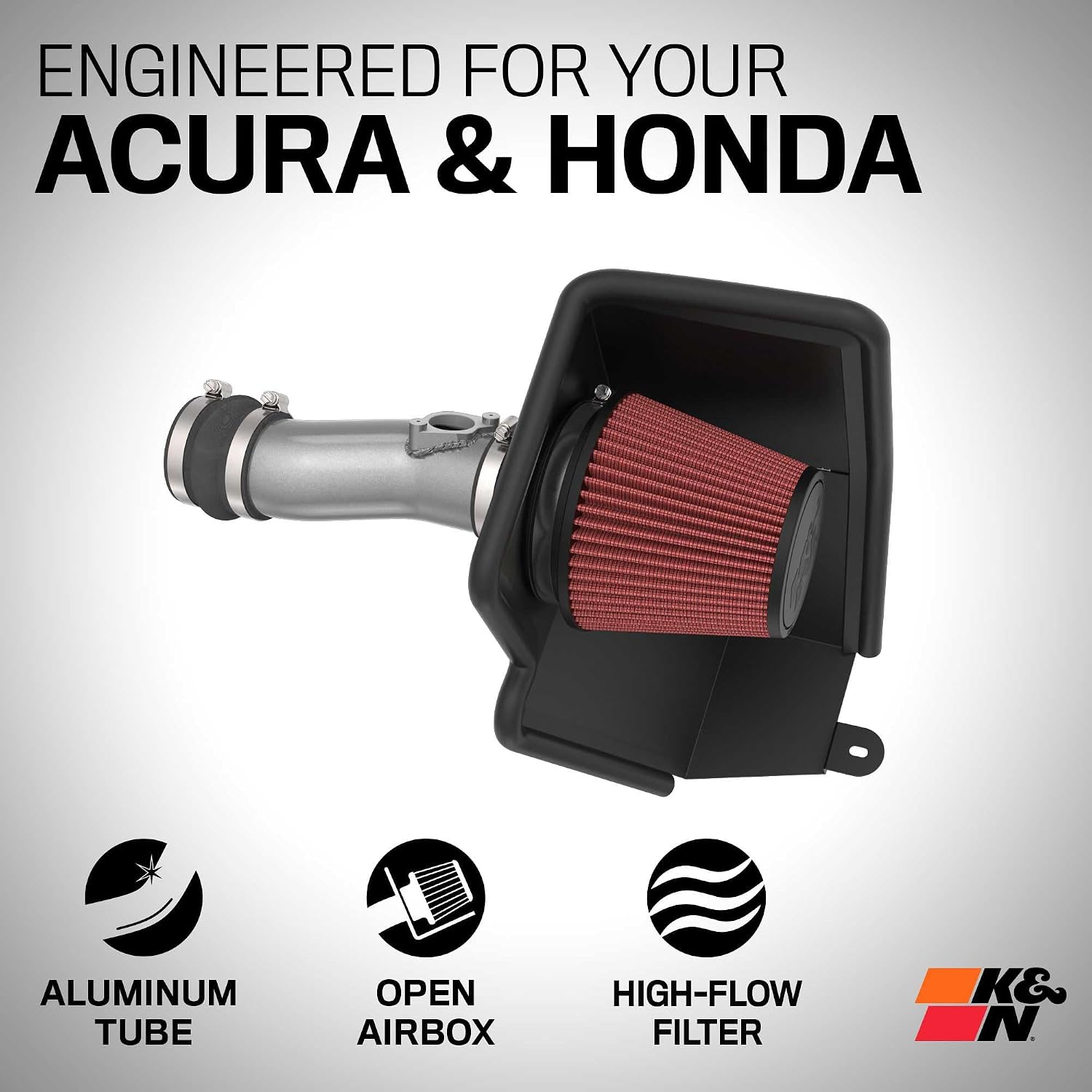
If you’ve ever popped the hood of a Honda Civic, Acura RSX, Volkswagen GTI, or Mitsubishi Lancer and thought about swapping the intake — the big plastic box and corrugated rubber hose that feeds air to your engine — you’re in the right place. The intake system’s job is straightforward: deliver as much cool, dense air as possible to the engine. More air means the engine can burn more fuel, and more combustion means more power. An aftermarket intake replaces the factory airbox and tubing with a less-restrictive pipe and a higher-flow filter, ideally positioned to pull from a cooler location than the hot air sitting above the engine. There are two main flavors: a cold-air intake (CAI), which routes the filter down near a fender or behind a bumper where temps are lower, and a short-ram intake (SRI), which keeps the filter in the engine bay for simplicity but gives up some temperature advantage.
This guide covers both types across four of the most popular sport compact platforms — Honda/Acura B- and K-series, VW’s 2.0T TSI, and the Mitsubishi 4G63/4B11 family. You’ll get honest gain expectations drawn from published dyno sheets and aggregated owner data, a side-by-side comparison of the main brands, and a clear decision rule at the end so you can stop second-guessing and pull the trigger.
What the Dyno Numbers Actually Show (And What They Don’t)
Let’s start with the number that gets oversold in every product listing: peak horsepower gain. Manufacturers publish these figures on dyno sheets, and they’re real — but context matters enormously.
By the numbers — typical published gains on naturally aspirated sport compacts:
| Platform | Intake Type | Avg. Published Gain (hp) | Avg. Published Gain (tq) |
|---|---|---|---|
| Honda Civic Si 2.0L (11th gen) | Cold-Air | 8–14 hp | 6–10 lb-ft |
| Acura RSX Type-S K20Z1 | Short-Ram | 5–9 hp | 4–7 lb-ft |
| VW GTI MK8 2.0T (stock tune) | Cold-Air | 10–18 hp | 12–20 lb-ft |
| Mitsubishi Evo X 4B11T | Cold-Air | 12–22 hp | 15–25 lb-ft |
A few things to notice. First, turbocharged platforms — the GTI and Evo — show bigger gains because the turbocharger amplifies the effect of improved airflow. The turbo can move more air when it has less restriction to fight at its inlet, and on a proper tune the ECU can also advance timing or raise boost slightly to capitalize. On a naturally aspirated engine like a stock K20, you’re working with what the atmosphere gives you, so the ceiling is lower.
Second, those gains assume the car is in solid mechanical health, running appropriate fuel, and — critically on the turbo platforms — is either running a tune or the ECU is adaptive enough to self-correct. K&N Engineering’s published dyno documentation for the 2023 Honda Civic Si 2.0L shows gains in the 8–12 hp range on a baseline dyno run. aFe Power’s product test documentation for their Momentum GT intake on the MK8 GTI shows gains closer to 14–18 hp when the car is allowed several drive cycles to adapt. Engine Labs’ technical piece on intake air temperature vs. power reinforces why: every 10°F reduction in intake air temp is worth roughly 1% additional power — small individually, but meaningful if you’re pulling air from a genuinely cool source versus the 170°F air sitting over a hot engine bay.
What the numbers don’t show: sound. Both SRI and CAI intakes will change the induction note significantly, especially under wide-open throttle. If you’re doing this partly for the pull-through-second-gear soundtrack, that’s completely valid — just be honest with yourself that it’s part of the value equation.
Cold-Air vs. Short-Ram: The Real Tradeoffs on These Platforms
The CAI-vs-SRI debate gets religious on forums, but the practical answer is platform- and use-case-specific.
Cold-air intakes route the filter into a fender well or behind a bumper fascia, where ambient air temperatures can be 30–60°F cooler than the engine bay under hard use. ECS Tuning’s buyer’s guide for the VW/Audi 2.0T TSI family specifically recommends a CAI over an SRI for street-and-occasional-track use, citing the heat soak problem: on a short-ram setup, after 20 minutes of spirited driving, the filter is sitting in air that’s 180–200°F, which partially negates the flow advantage. The tradeoff is complexity — routing the pipe into a fender well means more bends, more potential for water ingestion if the filter sits too low, and slightly longer installation time.
Short-ram intakes are simpler, typically $80–$150 cheaper, and easier to install on tight engine bays like the Honda B-series or the Mitsubishi 4G63. The filter lives under the hood, which makes inspection and cleaning faster. On daily-driven naturally aspirated Hondas — RSX, older Civic Si, even the Integra DC5 — the SRI is a legitimate choice if you’re not tracking the car hard or living in a hot climate. Super Street Online’s Evo X bolt-on feature notes that on forced-induction cars, the heat soak problem is more acute because turbos add their own heat to the intake charge, so a true cold-air routing is more defensible on an Evo or GTI than on an N/A K20.
The water ingestion concern deserves a direct answer because it’s cited constantly: a properly positioned cold-air intake — one where the filter is behind a fender liner rather than below the bumper line — has very low real-world risk of hydrolock (water entering the engine and causing catastrophic internal damage). Most reputable kits include a water shield or heat shield, and the filter position keeps it above standing water depth. If you regularly drive through deep puddles or ford flooded roads, a short-ram or a CAI with an air bypass valve is the call.
Brand Comparison: Who Makes What, and For Whom
Here’s where the intermediate buyer earns their money. The shelf is crowded, and not all products are equal on every platform.
K&N (drop-in filter vs. 57i Series CAI): K&N’s drop-in high-flow filter is the lowest-friction upgrade — you swap out your OEM paper filter for their oiled gauze unit, gain maybe 3–6 hp on an N/A Honda, and move on. It’s the right call if you want easy and repeatable. Their 57i Series cold-air kit is a step up — aluminum pipe, heat shield, and a larger cone filter — and owners on Honda-Tech forum aggregations consistently report it as one of the better bolt-on experiences on K-series engines. On VW platforms it’s fine, but the MK8 GTI community generally prefers platform-specific engineering from brands like aFe or Integrated Engineering.
[aFe Power (Momentum GT, Takeda)](https://www.amazon.com/dp/B077KZD48T?tag=greenflower20-20): aFe’s Momentum GT is widely considered the benchmark for the MK8 GTI and MK7.5 Golf R. aFe’s own published dyno documentation shows the Momentum GT producing consistent gains across dyno pulls with minimal heat soak deviation, which matters if you’re running the car at autocross or track days. Their Takeda line covers Honda applications including the FK8/FL5 Civic Type R and the current Integra Type S, with a CAI design that integrates tightly with the factory charge pipe routing. Across aggregated owner reviews on Civic forums, the pattern is strong install quality and consistent gain numbers that match published specs.
Injen (SP and RD Series): Injen has deep roots in the Honda community specifically. Their SP cold-air series has been a go-to for K-series builds for nearly two decades, and owner reports on K20A.org and related communities remain consistently positive for street applications. Their RD short-ram is a simpler, budget-friendlier option often recommended for RSX-S and older Civic Si builds where the goal is sound and modest gains rather than max airflow. Published gains on naturally aspirated K-series applications run 6–10 hp at peak, in line with the platform ceiling.
Mishimoto (Intake + Induction Hose kits): Mishimoto has expanded aggressively into intake territory alongside their cooling products. On Evo X and Evo VIII/IX (4G63 and 4B11 platforms), their performance intake systems are built with silicone induction hoses that stand up to heat and boost pressure better than rubber alternatives. For a builder who’s already running a Mishimoto intercooler kit, the coordinated fitment is a real convenience advantage. Gain claims run 10–18 hp on a lightly modified Evo X, per their published documentation.
Integrated Engineering (IE) — VW/Audi specialist: If you’re on a TSI or TFSI platform, IE is worth knowing. Their intake systems are engineered specifically for the MK7, MK8, and 8V/8Y Audi A3 platform, with a large carbon fiber or plastic airbox that significantly reduces heat soak versus an exposed cone filter. ECS Tuning’s blog consistently recommends the IE intake for GTI and Golf R builds where a stage 1 or stage 2 tune is in play, because the larger airbox volume and cold-air routing give the tune room to operate without thermal throttling on the inlet side.
Making the Call: If X, Then Y
Rather than leaving you with a ranked list, here’s the honest decision frame:
If your car is naturally aspirated (K20, B18, etc.) and mostly street-driven: A short-ram from Injen or a K&N 57i kit is defensible and honest. Expect 5–10 hp, a better induction sound, and no tuning required. Don’t let anyone sell you on transformative power on an N/A street car — it’s a real gain, just not a dramatic one.
If your car is naturally aspirated and you’re tracking it regularly: A cold-air intake matters more because heat soak is real under sustained load. Injen SP or aFe Takeda with a proper heat shield is the call. Still 8–14 hp in ideal conditions, but more consistent lap over lap.
If you’re on a turbocharged platform (GTI MK7/MK8, Evo X) and running a stage 1 or 2 tune: A cold-air intake should be on the list, but the intake alone without a supporting tune leaves gains on the table. Car and Driver’s technical explainer on cold-air intakes notes that on turbocharged engines with adaptive ECUs, the ECU will adjust fuel trims within its learned range — meaning you may see most of the gain without a flash, but a proper tune unlocks the rest. On a GTI or Golf R, the IE or aFe Momentum GT paired with an APR or COBB stage 1 tune is the path most builders with real dyno sheets follow.
If you’re building an Evo for time attack or drag: The intake is supporting infrastructure — what matters is that it doesn’t become a bottleneck. Mishimoto’s or a custom fabricated inlet with a large velocity stack and a zero-restriction filter is the call, and at this build level you’re likely speccing alongside a full standalone tune on a Haltech or AEM unit anyway. At that point, the intake conversation is almost secondary to intercooler sizing and compressor map optimization on your turbo — topics we dig into separately in our forced-induction guides.
The intake swap is genuinely one of the most honest bolt-ons you can make on a sport compact. The gains are real, the install is achievable in an afternoon, and the right choice isn’t complicated once you’re clear on what platform you’re running and how hard you’re driving it. Match the hardware to the use case, don’t buy based on the loudest induction sound in a YouTube clip, and you’ll be pleased with the result.