May 17, 2026 • Maria Andersen • 8 min reading time • Specs verified June 25, 2026
Cat-Back Exhaust Systems Ranked by Highway Drone: What the Decibel Data and Owner Reports Actually Tell You
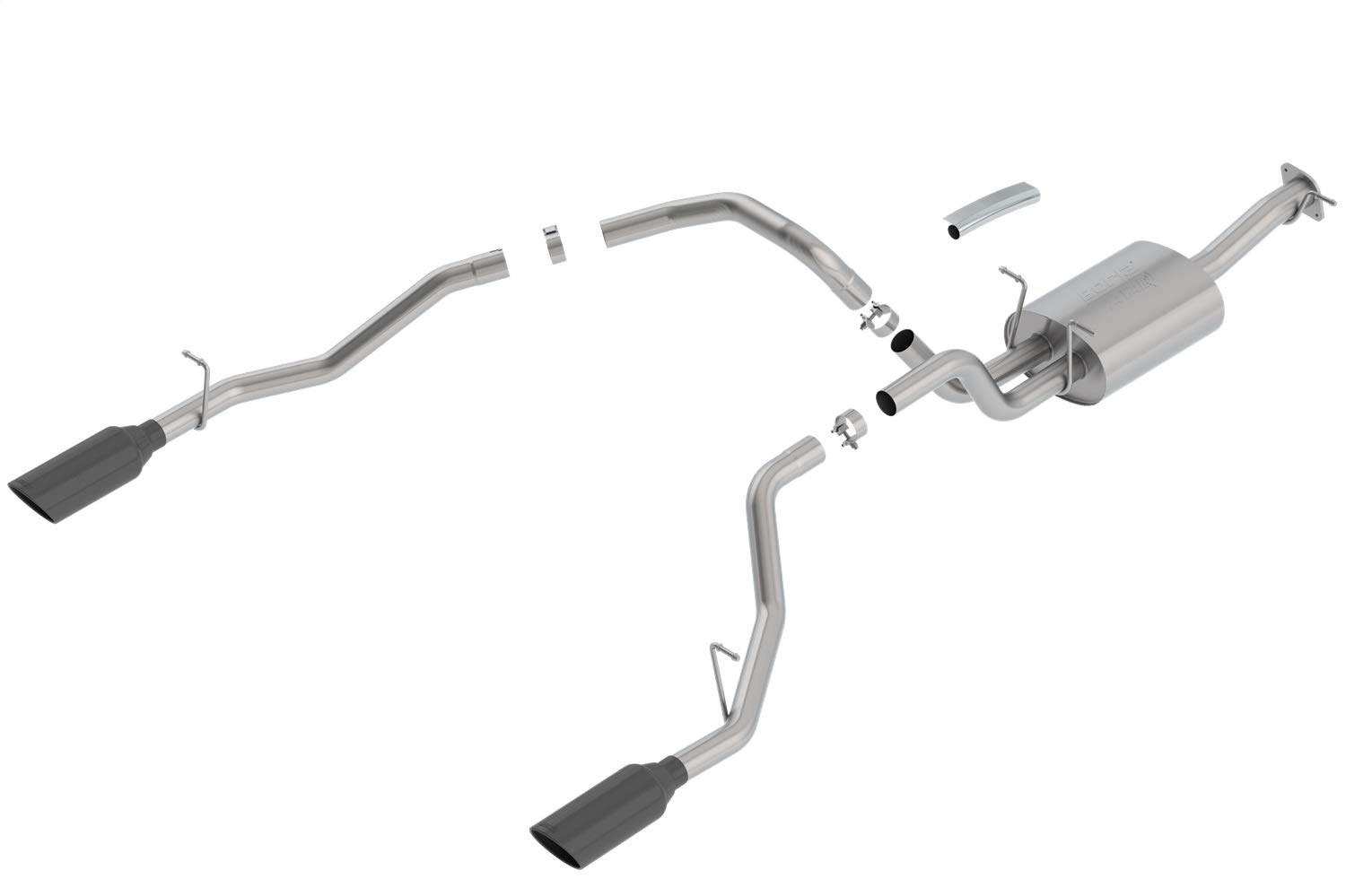
If you’ve ever spent three hours on a highway road trip with an aftermarket exhaust rattling your molars at exactly 2,000 RPM, you already understand the problem this article is solving. A cat-back exhaust is the portion of your exhaust system that runs from just behind the catalytic converter (the emissions device that cleans your engine’s output) all the way to the tips you see at the bumper. Swapping that section is one of the most popular performance modifications because it’s legal in most states, requires no engine tuning on naturally aspirated cars, and typically delivers a meaningful sound upgrade alongside modest rear-wheel horsepower gains. The catch? “Sounds great” at a cold-start or a wide-open-throttle pull doesn’t always mean “sounds great” at 70 mph on a Tuesday. Highway drone — that low, resonant hum that fills the cabin at cruise RPM — is the single most common owner complaint in exhaust reviews, and it’s the one most buyers underestimate before purchase. This guide aggregates decibel data, manufacturer specifications, and aggregated owner reports to rank the major cat-back players by their drone behavior, so you can make a smarter call before anything gets bolted on.
| EDITOR'S PICK[Flowmaster 817688 Outlaw Cat-ba…](https://www.amazon.com/dp/B00JHLN1EK?tag=greenflower20-20) | Mid-tier[Flowmaster 817689 Outlaw Cat-ba…](https://www.amazon.com/dp/B00JHLN1EK?tag=greenflower20-20) | Budget pickMBRP S5338P 3" Cat Back | |
|---|---|---|---|
| Exhaust tip | — | — | Single side exit |
| Material | — | — | Aluminum |
| Vehicle fit | — | — | Toyota Tacoma |
| Price | $1,210.27 | $1,004.95 | $319.99 |
| See on Amazon → | See on Amazon → | See on Amazon → |
Why Drone Happens (and Why Some Systems Are Worse Than It)
Drone isn’t random. It’s a specific acoustic phenomenon: when your engine’s exhaust pulses hit a frequency that resonates through the exhaust piping, the floor, and ultimately the cabin, you get a standing wave that the human ear perceives as a monotone hum. For most four-cylinder and V6 applications, this typically hits between 1,800 and 2,400 RPM — right where most people cruise on the highway. V8s tend to push it higher, around 2,000–2,800 RPM, which sometimes falls outside typical cruise RPM and makes the problem less severe.
The factors that determine how much a given system drones come down to three core variables:
1. Muffler internals. Straight-through perforated-core designs (like a glasspack or a Flowmaster Super 10-style chambered muffler) are inherently louder and more prone to drone than systems using sound-canceling resonator chambers or fiberglass/stainless wool packing. According to Turnology’s breakdown of muffler design and interior cabin noise, straight-through cores produce the most aggressive tone but create the least back-pressure resistance to exhaust flow — which is why they’re popular for big-power builds where a little drone is a tolerable tradeoff.
2. Pipe diameter relative to engine displacement. Oversizing the pipe — running a 3-inch cat-back on a naturally aspirated 2.0L four-cylinder, for example — lowers exhaust gas velocity, which amplifies low-frequency resonance. This is the most common reason budget-oriented universal cat-back systems drone more than OEM-engineered ones: they spec up for visual appeal, not tuned flow velocity.
3. The presence (or absence) of a resonator. A resonator is a secondary chamber in the exhaust mid-section that targets and attenuates specific problem frequencies without significantly affecting power output. Deleting it for weight savings or a louder tone is one of the fastest ways to introduce highway drone. Per Road & Track’s coverage of exhaust acoustics, the resonator’s job is precisely to eliminate that 1,800–2,400 Hz band that causes drone.
The Brands Ranked: Where Each Major Cat-Back Sits on the Drone Spectrum
This ranking synthesizes published manufacturer decibel ratings, dyno-documented sound measurements where available from Hot Rod Magazine’s cat-back shootout coverage, and aggregated long-term owner review patterns across verified automotive forums and retail review ecosystems. No single lab measurement defines this list — consider it a consensus view, not an absolute ranking.
Low Drone (Daily-Driver Friendly)
Corsa Sport and Corsa Extreme — Corsa’s defining technology is what they call Reflective Sound Cancellation (RSC), a patented muffler chamber geometry that uses the exhaust pulse itself to cancel specific resonant frequencies without absorption material that burns out over time. The result, consistently described by owners in Motor Trend’s coverage and in long-term ownership reviews, is a system that sounds genuinely aggressive under throttle but remains remarkably civil at steady cruise. The Sport is the more restrained of the two; the Extreme pushes the volume boundary without meaningfully increasing drone. Corsa publishes exterior decibel measurements (typically 89–93 dB at wide-open throttle on popular V8 applications), but their real differentiator is what the interior doesn’t hear at highway speed. Price range: $850–$1,400 depending on application.
Borla S-Type — Borla’s S-Type sits in the sweet spot of their lineup between the polite Touring and the aggressive ATAK. Owners consistently report it as one of the most drone-resistant systems in the $700–$1,100 range. Borla uses a multi-core muffler design with straight-through flow and proprietary internal baffling that manages to suppress low-frequency standing waves better than most straight-through competitors. Car and Driver’s exhaust guide has consistently noted Borla’s engineering as a benchmark for the balance of performance sound and everyday usability.
Magnaflow Street Series — Magnaflow’s perforated stainless-steel straight-through core is a well-known design, and on larger-displacement engines (V8 trucks, Mustang GTs, Camaro SS) it performs well. On four-cylinder and smaller V6 applications, however, the straight-through design interacts poorly with lower-velocity exhaust gas and owners more frequently report noticeable highway drone in the 2,000–2,200 RPM band. On the right application, though — a 5.0 Mustang, a 6.2 Silverado — Magnaflow Street Series owners consistently rate their daily-drive experience as highly livable. Price range: $500–$900.
Moderate Drone (Situationally Acceptable)
Flowmaster American Thunder / Super 44 — Flowmaster’s chambered muffler design is genuinely performance-oriented and produces the tone most people associate with American muscle: a deep, throaty rumble. The tradeoff that owners have reported for decades is that chambered designs produce noticeable drone at steady cruise, especially on four-cylinder and V6 engines. On V8 applications where cruise RPM naturally falls below the drone band, many owners report acceptable day-to-day comfort. But Hot Rod Magazine’s comparative coverage notes that Flowmaster owners on smaller-displacement vehicles more frequently address drone with resonator additions post-purchase than buyers of competing brands. Price range: $400–$750.
AFE Mach Force-XP — AFE’s cat-back systems are well-regarded for flow efficiency and power gains (typically 8–16 RWHP on turbo applications per manufacturer dyno data), but their drone profile is application-dependent. Turbocharged vehicles produce exhaust pulses with different harmonic characteristics than naturally aspirated ones, and owners on boosted platforms generally report fewer drone problems with the Mach Force-XP than NA owners do. If you’re running forced induction, this system scores better than its moderate placement here might suggest. Price range: $800–$1,300.
Higher Drone (Best for Track/Event Use or V8 Platforms Only)
Flowmaster Super 10 / Outlaw — These are Flowmaster’s most aggressive designs: minimal internal baffling, loud, and unambiguously track-first. Owners report interior drone as a constant companion at cruise RPM, and most long-term reviews explicitly position these systems as weekend-only or track-day hardware. They make real power (hot rod.com shootout data confirms strong low-restriction exhaust flow), but the daily-drive penalty is significant. Price range: $350–$600.
Borla ATAK — The ATAK (Acoustically Tuned Applied Kinetics) is Borla’s most aggressive street system, and it’s notably louder than the S-Type at all RPM ranges. Owners on V8 platforms report that cruise drone is present but manageable; owners on four-cylinder and six-cylinder applications more frequently describe highway use as fatiguing. If your car is a weekend performer and the sound is your primary goal, ATAK delivers. If you’re logging 200+ highway miles on weekends, the S-Type is probably your answer. Price range: $950–$1,500.
By the Numbers
| System | Typical RWHP Gain (NA) | Ext. dB (WOT, mfr. data) | Drone Risk (Owner Consensus) | Price Range |
|---|---|---|---|---|
| Corsa Sport / Extreme | 5–15 hp | 89–93 dB | Low | $850–$1,400 |
| Borla S-Type | 8–14 hp | 90–94 dB | Low | $700–$1,100 |
| Borla ATAK | 8–14 hp | 93–97 dB | Moderate–High | $950–$1,500 |
| Magnaflow Street | 6–12 hp | 88–92 dB | Low–Moderate (app. dependent) | $500–$900 |
| AFE Mach Force-XP | 8–16 hp (boosted) | 91–95 dB | Moderate | $800–$1,300 |
| Flowmaster Super 44 | 5–10 hp | 92–96 dB | Moderate–High | $400–$750 |
| Flowmaster Super 10 | 6–11 hp | 95–100 dB | High | $350–$600 |
Gain figures reflect manufacturer dyno data and are application-specific. Decibel figures are exterior measurements; interior levels vary by vehicle body, insulation, and installation quality.
How to Use This Data in Your Decision
Here’s where this gets concrete. The drone question isn’t just about the system — it’s about the combination of system, application, and use case. Here’s the decision framework:
If you drive 10,000+ miles per year on highways, your primary vehicle is a four- or six-cylinder, and you want a performance sound upgrade: Corsa Sport or Borla S-Type are the clear answers. The RSC technology and Borla’s multi-core baffling were both explicitly engineered to solve the daily-driver drone problem. You’ll pay $700–$1,400 for the privilege, but owners consistently validate that the premium buys genuine all-day comfort.
If you’re on a V8 platform (Mustang GT, Camaro SS, F-150 5.0, or similar) and want aggressive sound without tracking the car: Magnaflow Street Series or Borla S-Type both perform well here. V8 cruise RPM often avoids the worst drone bands, and the Magnaflow’s street-series tuning is optimized for these displacement ranges. Save $200–$400 versus the Corsa without meaningful comfort tradeoff.
If your car is a weekend/event vehicle and you want maximum sound presence: Flowmaster Super 10, Flowmaster Outlaw, or Borla ATAK. Accept the drone, enjoy the noise, and consider a resonator add-back if the occasional highway stretch becomes unbearable.
If you’re running a boosted application (turbo or supercharged): The boosted exhaust note is fundamentally different from NA — the turbo itself absorbs significant low-frequency energy — which means many “drone-prone” systems actually behave considerably better on forced-induction vehicles. AFE Mach Force-XP’s flow efficiency advantage matters more here, and the drone complaint pattern is less common in the boosted owner base. Verify against your specific platform before defaulting to the premium-tier systems.
One final note: a properly installed resonator delete will dramatically increase drone on nearly any system. If a shop quotes you a resonator delete as a simple upgrade or cost savings measure, ask them directly how it affects cabin noise at 2,100 RPM. The honest ones will tell you. The others are why this article exists.